All News & Insights

Shoppers are prioritizing clean and affordable

hands holding two jars of food

Share

Eating well used to come with an assumption: it’s going to cost more. 

That tradeoff is now under pressure. 

Shoppers are still prioritizing clean ingredients, transparency, and products that support their overall well-being. But persistent cost pressures are forcing more scrutiny with every purchase. The result is a more calculated approach to the basket, where every item has to justify both its nutritional value and price. 

This shift is reshaping expectations across the natural channel. It’s no longer enough for products to be better-for-you. They also have to prove they’re worth it, quickly. 

Health expectations are holding. Spending isn’t.

Demand for better-for-you products has not softened. If anything, it has become more intentional. 

Shoppers are paying closer attention to ingredients, seeking out products that align with specific needs, whether it’s digestive health, dietary restrictions, or broader wellness goals. Food is increasingly viewed as a long-term investment, not a short-term purchase. 

What has changed is how those decisions are made. 

Cost pressures are reaching a broader set of consumers, including those who were previously less sensitive to price. That’s forcing tradeoffs, but not necessarily away from health. Instead, shoppers are becoming more selective, looking for ways to maintain their standards while managing spend. 

For brands, that shift raises the bar. Products are no longer evaluated in isolation. They’re compared with expectations around both performance and price.

The affordability reset 

For years, natural and organic products have carried a price premium. That perception is starting to shift. 

Shoppers are recognizing that eating well doesn’t always require a major boost in spend, especially as assortments expand and pricing becomes more competitive. At the same time, they’re becoming more deliberate about where they’re willing to pay more and where they’re not. 

Private label is accelerating this, increasingly setting the baseline for value as shoppers look for cost-effective options that still meet quality expectations. For branded products, the question is no longer whether a product is healthier. It’s whether the difference justifies the price. 

Premium is earned, not assumed. 

Clarity is driving conversion 

Clarity has become one of the most powerful levers at shelf. 

Shoppers are not willing to decode complex labels or compare dense ingredient lists. They’re making faster decisions and relying on signals that are easy to understand at a glance. 

Products that communicate effectively, through simplified ingredients and straightforward messaging, are gaining traction. In many cases, they’re outperforming more established competitors, even when priced higher. 

The difference is not always the product itself. It’s how quickly the value is understood. 

Merchandising is critical here, and brands have a role in enabling it. Clear value signage, curated assortments, and simple meal solutions help shoppers connect health and affordability in real time. 

When executed well, these tactics make it easier to feel confident in the decision.

Trust still favors natural 

Natural retailers still benefit from built-in trust. 

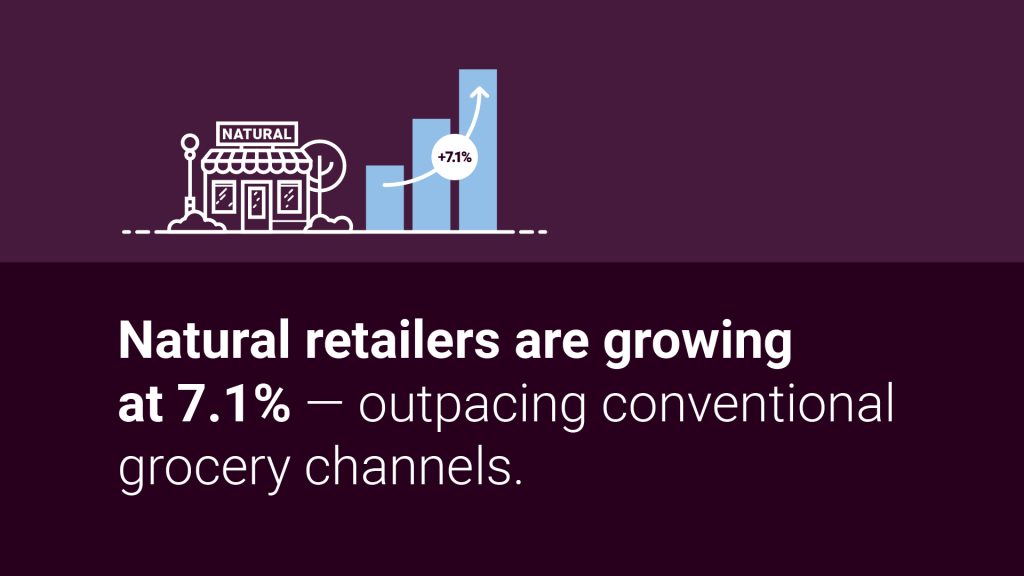
Shoppers walk in with the expectation that products meet a certain standard. That reduces the need for deep research and speeds decision-making. It also reinforces why the channel continues to perform well relative to more conventional formats. The experience is more focused, more navigable, and more aligned with shopper intent. 

For brands, that trust creates both an advantage and a constraint. Products that meet the standard can convert faster, but those that fall short on clarity or credibility are quickly filtered out. 

Conventional retailers are making progress, particularly as better-for-you assortments expand. But there’s still an opportunity to improve how those products are surfaced and explained. When healthier options are priced at a premium, context matters. Without it, price becomes the deciding factor.  

Digital is raising the bar for transparency 

The role of digital in this space is growing quickly. 

Tools like barcode scanning apps are making it easier for shoppers to evaluate products instantly, translating ingredient lists into digestible information. Shoppers now expect this information to be accessible across the board. 
 
Brands, in partnership with retailers, can build on this through digital merchandising, targeted promotions, and online platforms that reinforce product attributes. Some categories lend themselves to this type of engagement more than others, but the broader trend is clear. 
 
Shoppers expect access to information. The easier it is to find and understand, the more likely it is to influence the purchase. Brands that invest in complete product data, attribute tagging, and digital discoverability are better positioned to benefit from these behaviors. 

Pricing strategy is becoming more intentional 

Affordability does not mean racing to the bottom. 

A more effective approach is emerging, one that maintains a clear relationship between private label and branded products. Private label anchors value, while brands justify a premium through differentiation. 

This balance keeps shoppers in the category rather than trading out entirely. It also reinforces that value is about more than cost. It’s about what the product delivers in return. 

Lean too heavily on price, and differentiation disappears. Lean too far into premium, and relevance declines.

Where brands can win now 

The convergence of health and affordability is not a short-term shift. It reflects a more disciplined, more informed shopper. 

Consumers are not lowering their expectations. They want products that support their health, align with their values, and make sense for their budgets. And they expect those benefits to be apparent from the start. 

For brands, the path forward is practical.  

  • Make better-for-you benefits easier to understand. 
  • Communicate value quickly and credibly.  
  • Structure pricing to maintain a clear role alongside private label.  
  • Remove friction wherever possible, both in-store and online. 

Eating well doesn’t always have to cost more. Proving that to shoppers requires more deliberate execution than ever before. 


All News & Insights

Natural is no longer just a channel — it’s a consumer expectation 

Share

For a long time, our industry has treated “natural” as a channel. 
A defined space. 
A separate aisle. 
A different kind of shopper. 

That framing no longer holds. 

What we’re seeing today isn’t the growth of a niche, it’s the evolution of consumer expectation. Clean ingredients, transparency, and purpose-driven brands are no longer confined to specialty retail. They are influencing how shoppers evaluate products everywhere, from natural and specialty stores to mass and traditional grocers. 

The implication is simple, but significant: If natural is still being approached as a channel strategy, brands risk missing what today’s consumer truly expects. 

From niche channel to consumer standard

During my three decades in CPG, including nearly 20 years at The Clorox Company, I had the opportunity to help integrate a vitamin and supplement business into a large-scale organization.  This experience fundamentally changed how I view the natural consumer. 

That work required a deep understanding of a shopper who was highly engaged, highly informed, and deeply intentional about what they were putting into their bodies. What stood out then and continues to stand out now is that this consumer doesn’t see “natural” as a category. They see it as the standard and way of life.  

That mindset has only accelerated. Shoppers have access to more information than ever before, and they’re using it. Labels, sourcing practices, ingredient transparency, and brand values are no longer secondary considerations, they’re central to the purchase decision. 

Consumers may begin their journey in a natural retailer, but they now expect to find those same standards wherever they shop. The line between channels isn’t just blurring. In many ways, it’s disappearing altogether. 

The opportunity — and the tension 

This shift creates real opportunity for brands, but it also exposes some common missteps, particularly as emerging brands scale.  
 
One of the most frequent challenges I see is the push for distribution without a clear strategy behind it. 
 
Growth creates momentum, and momentum creates urgency. But not all distribution is productive distribution. Expanding too quickly, without strong velocity, operational readiness, or a clear brand foundation, can dilute both impact and identity.  

The brands that succeed tend to be more disciplined. They build credibility in the right places, establish strong performance, and expand with intention. Simply put, they’re willing to go slow in order to grow sustainably. 
 
At the same time, the operating environment has become more complex. Many brands rely on multiple broker partners across regions and channels. While this can create reach, it can also fragment execution. Messaging becomes inconsistent. Storytelling loses clarity. Over time, the brand itself can feel diluted in the market. 
 
In the natural space especially, consistency matters. The consumer isn’t just buying a product, they’re buying into a belief system, a story, and a promise. When that promise feels unclear, trust erodes. 

When innovation outpaces clarity 

Layered onto all of this is a shopper navigating an increasingly crowded and noisy marketplace. 

Industry events like Natural Products Expo West highlight just how fast innovation is moving. Functional beverages, protein fortification, fiber-forward formulations. Creativity is undeniable. 

But innovation doesn’t always equal clarity. 

Adding a trending ingredient doesn’t automatically make a product better for the consumer. In some cases, it adds confusion. The responsibility of our industry isn’t simply to innovate, but to ensure that innovation is meaningful, credible, and aligned with why consumers came to this space in the first place: their health. 

This is where purpose-driven brands hold an advantage. If they protect it. 

Many of the strongest brands in natural were built to solve a real problem. That origin matters. It’s what establishes trust and authenticity. As brands scale, the challenge becomes maintaining that clarity of purpose. 

Every decision, from distribution to merchandising to messaging, should come back to a simple question: What problem are we solving for the consumer? 

When that remains clear, growth is more sustainable. When it doesn’t, the brand risks becoming just another option on the shelf. 

What this shift requires of brands 

Natural isn’t going away. It’s becoming embedded in how consumers define quality across every retail environment. 

The opportunity for brands and for the industry is not just to participate in this shift, but to lead it with focus and discipline. 

That means: 

  • Being intentional about where and how you scale 
  • Maintaining consistency in your story and execution 
  • Staying deeply grounded in the needs of the consumer 

Because this isn’t about a channel. 

It’s about earning trust in a more informed, more selective, and more empowered consumer landscape. 

What the strongest natural brands get right

For me, this moment feels less like a trend and more like a quiet reset. Consumers are telling us clearly that they expect more. More transparency. More intention. More respect for what they put into their bodies and why it matters. 
 
Natural isn’t about where a product sits on the shelf anymore. It’s about the standards behind it. The brands that will endure are the ones that listen closely, stay grounded in their purpose, protect their standards, and resist the urge to chase growth at the expense of trust. 

If there’s one takeaway, it’s this: meeting today’s consumer doesn’t require reinventing who you are. It requires the discipline to stay clear about what you stand for. And when that clarity is present, the rest tends to follow. 

Follow Tamara on LinkedIn for her practical insight on scaling natural and emerging brands in conventional retail. 

All News & Insights

Healthspan over lifespan: How functional ingredients are reshaping natural CPG 

Share

For years, “living longer” was the wellness north star. But today’s consumers aren’t satisfied with simply adding years — they want those years to feel good. That shift from lifespan to healthspan is transforming natural CPG and reshaping what shoppers buy, how they buy it, and where they expect to find it. 

At Impact Natural, we see this change playing out every day in natural retail. It’s not about fads or quick fixes. It’s about proactive, science-backed choices that help people live better, not just longer. 

A daily mindset, not a fad 

According to McKinsey, the global wellness market has soared to $2 trillion, fueled by younger generations who treat wellness as a lifestyle, not an occasional reset. They want products that slot naturally into their routines, whether that’s a functional snack, a supplement, or a beverage that comes with benefits. 

What does that mean for brands? It means short-term diet trends don’t carry the weight they once did. Shoppers want tools for long-term performance: energy to fuel a workout, focus for a productive workday, restorative sleep to repair the body and mind. 

Six categories driving growth 

McKinsey highlights six categories where demand is climbing: 

  • Functional Nutrition 
  • Beauty & Aesthetics 
  • Longevity & Healthy Aging 
  • In-Person Wellness Experiences 
  • Weight Management 
  • Mental Health & Mindfulness 

Each offers white space for brands that can innovate with credibility. For example, weight management is being reshaped by consumers using GLP-1 medications, many of whom are looking for nutrient-dense products to complement those regimens. 

Functional ingredients to watch 

Five ingredients are seeing strong traction, each backed by science and market demand: 

  • Magnesium — for stress relief and sleep (SPINS) 
  • Berberine — for blood sugar control (Market Research Biz) 
  • Creatine — for cognitive performance and muscle health (SPINS) 
  • Lion’s Mane — for brain health (Nutritional Outlook) 
  • Colostrum — for gut support and immunity (Mordor Intelligence) 

What unites them is versatility. These ingredients appear not just in supplements, but across categories, from functional beverages to protein snacks and powders. That cross-aisle relevance makes them powerful building blocks for both established and emerging brands.

What the numbers say 

Behind the buzz, consumer data confirms that wellness is more than a passing trend: 

These numbers aren’t abstract. They reflect the shoppers walking into natural retailers every day: informed, motivated, and willing to pay for products that make a difference. 

Generational drivers 

Wellness priorities don’t look the same across age groups. Each generation approaches healthspan with distinct motivations and habits

  • Gen Z & Millennials: Treat wellness as a lifestyle, appreciate personalization, and are willing to pay for quality and innovation. Social media and tech-driven products influence choices. Though they make up 36% of the U.S. adult population, they drive over 41% of wellness spending. Their priorities extend to sleep, appearance, and mindfulness, and they’re quick to adopt health apps and wearables. 
  • Gen X & Baby Boomers: Focus on health maintenance and aging well. Value proven ingredients and seek price-conscious solutions, with less pull from digital trends. Purchases lean toward essentials (vitamins, analgesics, and eye care) with less interest in newer or tech-based offerings. They value simplicity and efficacy as much as clean ingredients. 

What it means for natural retail 

Natural and organic shoppers already associate their purchases with long-term health benefits. The opportunity lies in making that connection even clearer. Helping shoppers understand that a higher-priced item delivers future savings in healthcare or quality of life reframes value in a way that resonates. 

Natural retailers reinforce these expectations. For example, Sprouts reports 30% of sales from organic products alongside strong sustainability commitments. These values align with shopper expectations and reinforce why natural retail remains a trusted channel for wellness innovation. 

Opportunities for brands 

So, what should brands take from all this? 

  1. Lead with benefits, not buzzwords. Don’t just name an ingredient, show what it does and why it matters.
  2. Design for discovery. Whether in-store or online, shoppers should be able to see at a glance how your product supports their goals. QR codes can extend the story to ingredient sourcing and usage guidance without cluttering the label. 
  3. Price with purpose. Shoppers are willing to invest in wellness if you connect the dots between cost and long-term payoff. 
  4. Think omnichannel. Consumers expect to find functional products everywhere: their local co-op, their Whole Foods aisle, and their digital carts. 
  5. Back it up with science. With 54% of consumers saying they know their supplements, vague claims won’t cut it. Data and research matter. 
  6. Align across SKUs. From packaging to claims, a unified approach reinforces trust and helps shoppers recognize your brand instantly. 

The bottom line 

As Scott Dicker of SPINS explained, active nutrition was once a market reserved for athletes and gym-goers. Today, it belongs to everyone, reflecting a shift toward wellness as a universal priority. 

For brands competing in natural retail, the opportunity is here: align with this healthspan mindset, innovate with ingredients that matter, and tell your story with clarity and confidence. 

At Impact Natural, our role is to help brands do exactly that, translating consumer insights into retail strategies that win shelf space, shopper loyalty, and lasting growth. 

Let’s talk about positioning your products for the healthspan era.

All News & Insights

Inspire the buyer 

Share

Skip the small talk. Show up ready to solve real business problems. 

Retail buyers are busy – really busy.  

Every call, email, and “quick check-in” competes for a packed calendar. 

Brands that break through bring something of value and deliver it in a way that’s easy to act on. Let’s get inside the mind of a typical retail merchant to see what it takes to build better partnerships. 

First, think like a buyer 

If you were a buyer, what would you want from brands competing for your time? Not a deck full of data points you already know. Not ten “priorities” to digest at once. 

You’d want a few laser-focused ideas for hitting your targets, winning your category, and clearing any roadblocks stalling your momentum.  

With that in mind, our teams: 

  • Avoid “just touching base” messages. Every outreach should deliver value. 
  • Aim to bring something new to the table. Think fresh data, competitive intel, or an angle that creates an “aha” moment. 
  • Focus on one or two outcomes per call. Moving one bold idea forward is better than dancing around a dozen.

When prepping for meetings, we think about wins from the buyer’s point of view, asking: 

  • Will it help them show results in the next 4-week scan? 
  • Is it useful enough to share with their team? 
  • Can they sell it to senior leaders without extra work? 

If it’s yes, it stays in the deck. If not, it comes out. From there, we drill down even further: 

  • “Here’s how we’ll drive incremental units, not just shift share.”  
  • “This solves a known execution issue in your stores.”  
  • “We’ve tested this in a similar banner — here’s the lift.” 

It’s the difference between taking up time and creating value. 

Make every interaction count 

Our latest CPG Confidential research shows that nearly 30% of CPG leaders never get beyond their category buyer — a missed chance to influence the people deciding space, budgets, and where to focus resources. 

The biggest wins come from cross-category and executive leaders. They set the bigger picture and remember the partners who prove shopper demand, deliver results, and build trust over time. 

In 2024, we led 1,600 senior-level meetings with retail partners — the kind of collaborations that can take a brand from $10 million to $300 million — and are on track to match or surpass that pace in 2025. 

We earn this access by pairing hyperlocal insight with national resources like IBM-powered analytics. And while AI tools are spotting issues faster than ever, they can’t replace boots in the aisle, in the community, and across the store. 

Here’s how it pays off in practice: When ALOHA consolidated their retail business with Acosta, buyer conversations became more focused. That holistic clarity helped the brand double its retail presence and become the #1 protein bar at Whole Foods. 

Get out of the office 

One of the best ways to inspire a buyer isn’t a meeting at all. It’s a store walk. 

Buyers are buried in spreadsheets and virtual calls. Getting them into the aisle — seeing the shelf, the competition, and the consumer experience — shifts the dialogue. It’s tactile, it’s memorable, and it gives them real context for decisions. 

We’ve seen entire conversations shift during a 20-minute store walk. A display issue in frozen, a competitor with killer signage, or a price point that’s off. We highlight what others are doing well and follow up with photos buyers can share with their team. Seeing it in person makes it real and adds urgency. 

Add a quick agenda, brief summary, and enough lead time to plan it around breakfast or lunch, and it’s that much easier for buyers to say yes. It’s not always easy to arrange, but when it happens, it’s next level. 

Tell a better story

Believe it or not, buyers told us what they want from brand sales teams is better storytelling. 

So, we built Simple Stories — concise, one-page slides that make retail scenarios clear and actionable. They feature shelf photos, shopper insights, and clean data tied to what’s happening in the aisle or in POS reports. The format is easy to grasp, share, and act on. 

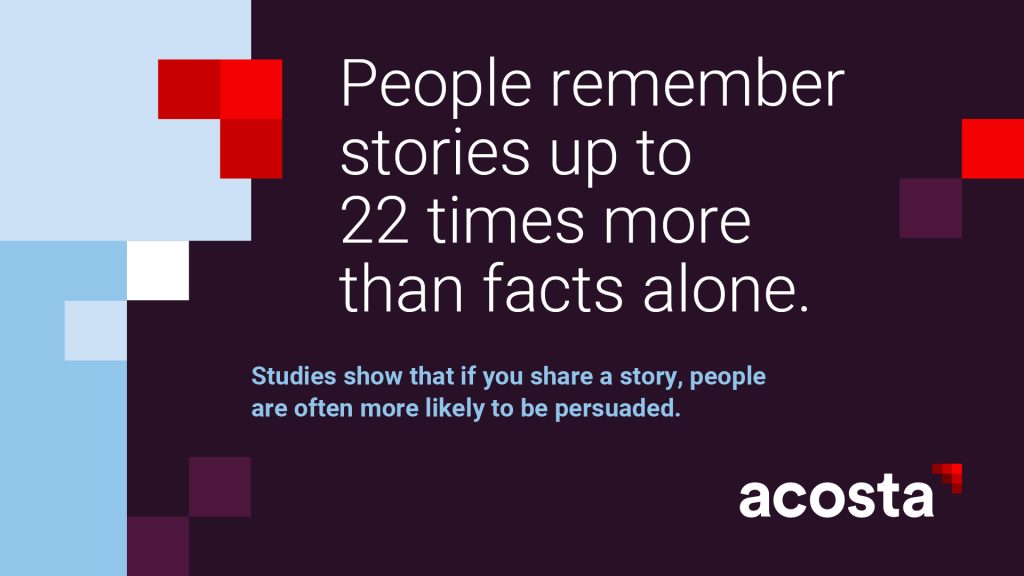
In 2024, we shared more than 200 Simple Stories with buyers, which helped frame the opportunity and made it easy for them to champion ideas internally. It’s no surprise that people remember stories up to 22 times more than facts alone.

For one healthy frozen treat brand, storytelling sparked a turning point for growth. Leaning into its unique origin story, our in-store sampling and promotional events helped expand distribution by 200K+ points and drive $200MM in category sales. 

Inspire, don’t overwhelm 

The market is fast-moving. Pricing and value remain tough. Eight out of ten new products still fail.  

But there are always ways to break through — and we see them every day. 

Remember that small, focused wins stack up over time. At Whole Foods, Kikkoman moved from regional to national distribution after years of stalled growth — not because we flooded buyers with ideas, but because we brought compelling reasons to act. We built trust, backed it with data showing that more Kikkoman meant more category sales, and earned a spot in all 510 stores that drove +95% sales increase. 

In today’s retail environment, inspiring the buyer isn’t optional. It’s what separates the brands winning shelf space from the ones left fighting for it.  

Keep it simple. Make it count. We can show you how.