Eating well used to come with an assumption: it’s going to cost more.
That tradeoff is now under pressure.
Shoppers are still prioritizing clean ingredients, transparency, and products that support their overall well-being. But persistent cost pressures are forcing more scrutiny with every purchase. The result is a more calculated approach to the basket, where every item has to justify both its nutritional value and price.
This shift is reshaping expectations across the natural channel. It’s no longer enough for products to be better-for-you. They also have to prove they’re worth it, quickly.
Health expectations are holding. Spending isn’t.
Demand for better-for-you products has not softened. If anything, it has become more intentional.
Shoppers are paying closer attention to ingredients, seeking out products that align with specific needs, whether it’s digestive health, dietary restrictions, or broader wellness goals. Food is increasingly viewed as a long-term investment, not a short-term purchase.
What has changed is how those decisions are made.
Cost pressures are reaching a broader set of consumers, including those who were previously less sensitive to price. That’s forcing tradeoffs, but not necessarily away from health. Instead, shoppers are becoming more selective, looking for ways to maintain their standards while managing spend.
For brands, that shift raises the bar. Products are no longer evaluated in isolation. They’re compared with expectations around both performance and price.
The affordability reset
For years, natural and organic products have carried a price premium. That perception is starting to shift.
Shoppers are recognizing that eating well doesn’t always require a major boost in spend, especially as assortments expand and pricing becomes more competitive. At the same time, they’re becoming more deliberate about where they’re willing to pay more and where they’re not.
Private label is accelerating this, increasingly setting the baseline for value as shoppers look for cost-effective options that still meet quality expectations. For branded products, the question is no longer whether a product is healthier. It’s whether the difference justifies the price.
Premium is earned, not assumed.
Clarity is driving conversion
Clarity has become one of the most powerful levers at shelf.
Shoppers are not willing to decode complex labels or compare dense ingredient lists. They’re making faster decisions and relying on signals that are easy to understand at a glance.
Products that communicate effectively, through simplified ingredients and straightforward messaging, are gaining traction. In many cases, they’re outperforming more established competitors, even when priced higher.
The difference is not always the product itself. It’s how quickly the value is understood.
Merchandising is critical here, and brands have a role in enabling it. Clear value signage, curated assortments, and simple meal solutions help shoppers connect health and affordability in real time.
When executed well, these tactics make it easier to feel confident in the decision.
Trust still favors natural
Natural retailers still benefit from built-in trust.
Shoppers walk in with the expectation that products meet a certain standard. That reduces the need for deep research and speeds decision-making. It also reinforces why the channel continues to perform well relative to more conventional formats. The experience is more focused, more navigable, and more aligned with shopper intent.
For brands, that trust creates both an advantage and a constraint. Products that meet the standard can convert faster, but those that fall short on clarity or credibility are quickly filtered out.
Conventional retailers are making progress, particularly as better-for-you assortments expand. But there’s still an opportunity to improve how those products are surfaced and explained. When healthier options are priced at a premium, context matters. Without it, price becomes the deciding factor.
Digital is raising the bar for transparency
The role of digital in this space is growing quickly.
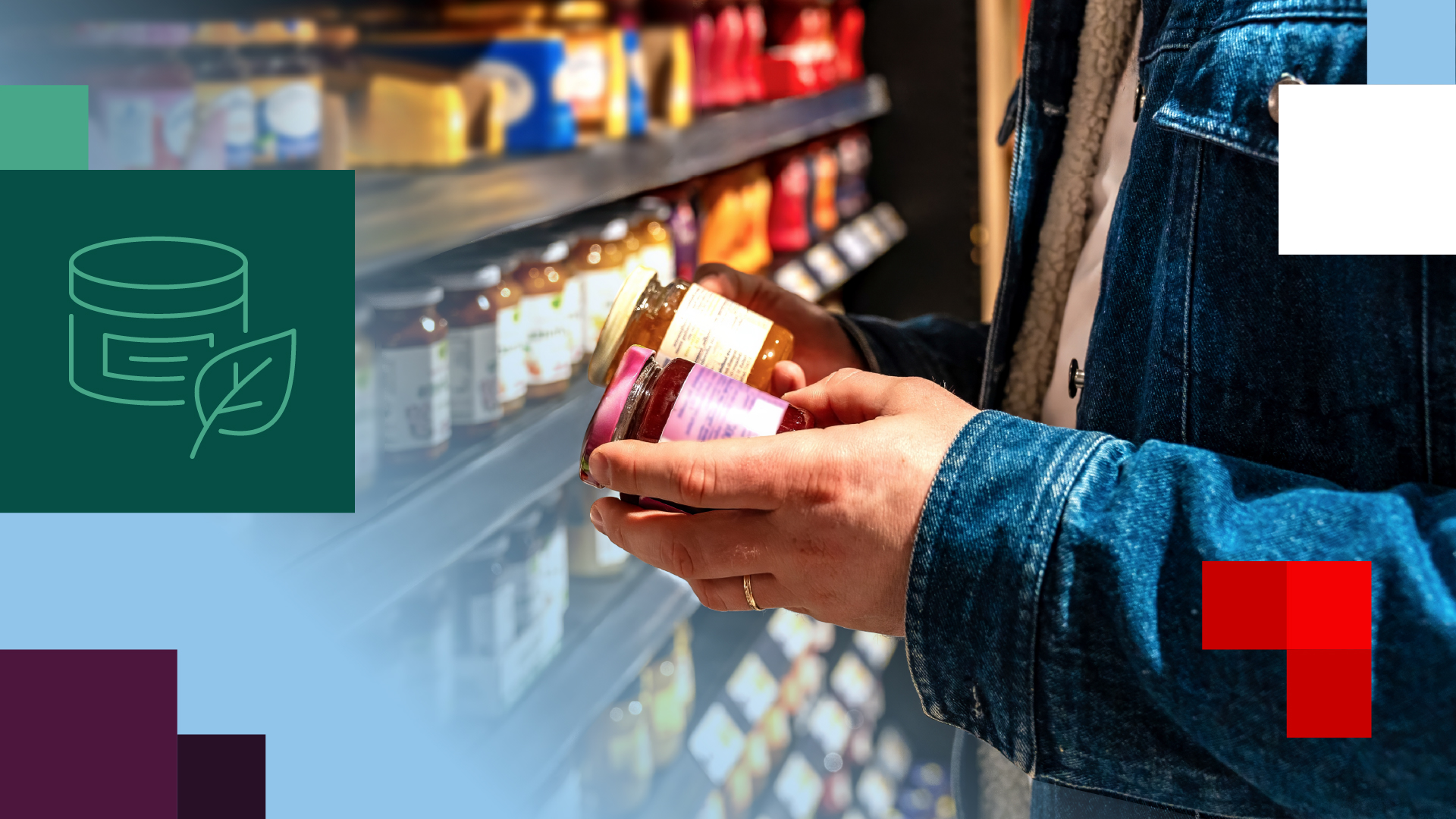
Tools like barcode scanning apps are making it easier for shoppers to evaluate products instantly, translating ingredient lists into digestible information. Shoppers now expect this information to be accessible across the board.
Brands, in partnership with retailers, can build on this through digital merchandising, targeted promotions, and online platforms that reinforce product attributes. Some categories lend themselves to this type of engagement more than others, but the broader trend is clear.
Shoppers expect access to information. The easier it is to find and understand, the more likely it is to influence the purchase. Brands that invest in complete product data, attribute tagging, and digital discoverability are better positioned to benefit from these behaviors.
Pricing strategy is becoming more intentional
Affordability does not mean racing to the bottom.
A more effective approach is emerging, one that maintains a clear relationship between private label and branded products. Private label anchors value, while brands justify a premium through differentiation.
This balance keeps shoppers in the category rather than trading out entirely. It also reinforces that value is about more than cost. It’s about what the product delivers in return.
Lean too heavily on price, and differentiation disappears. Lean too far into premium, and relevance declines.
Where brands can win now
The convergence of health and affordability is not a short-term shift. It reflects a more disciplined, more informed shopper.
Consumers are not lowering their expectations. They want products that support their health, align with their values, and make sense for their budgets. And they expect those benefits to be apparent from the start.
For brands, the path forward is practical.
- Make better-for-you benefits easier to understand.
- Communicate value quickly and credibly.
- Structure pricing to maintain a clear role alongside private label.
- Remove friction wherever possible, both in-store and online.
Eating well doesn’t always have to cost more. Proving that to shoppers requires more deliberate execution than ever before.