For a long time, our industry has treated “natural” as a channel.
A defined space.
A separate aisle.
A different kind of shopper.
That framing no longer holds.
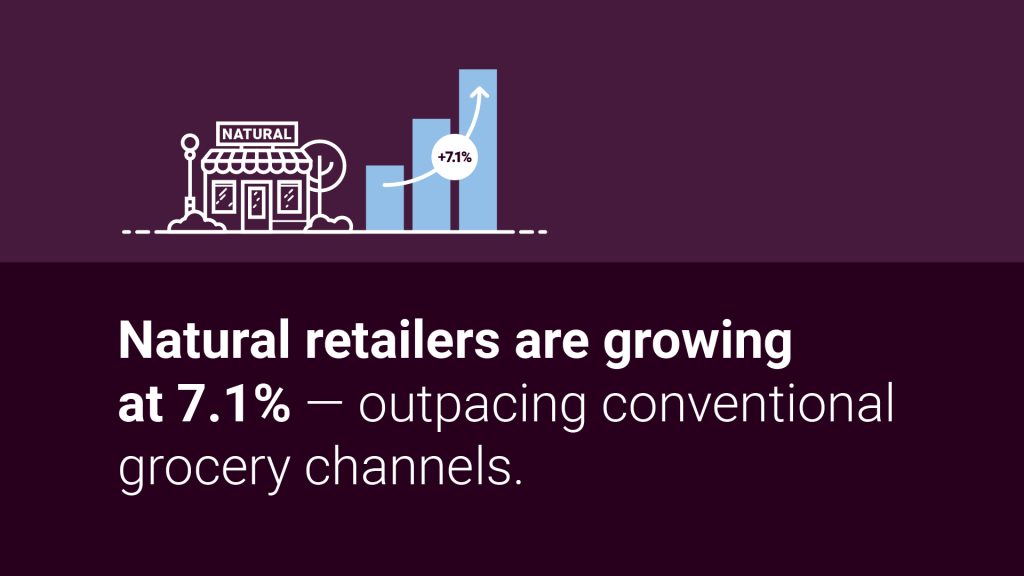
What we’re seeing today isn’t the growth of a niche, it’s the evolution of consumer expectation. Clean ingredients, transparency, and purpose-driven brands are no longer confined to specialty retail. They are influencing how shoppers evaluate products everywhere, from natural and specialty stores to mass and traditional grocers.
The implication is simple, but significant: If natural is still being approached as a channel strategy, brands risk missing what today’s consumer truly expects.
From niche channel to consumer standard
During my three decades in CPG, including nearly 20 years at The Clorox Company, I had the opportunity to help integrate a vitamin and supplement business into a large-scale organization. This experience fundamentally changed how I view the natural consumer.
That work required a deep understanding of a shopper who was highly engaged, highly informed, and deeply intentional about what they were putting into their bodies. What stood out then and continues to stand out now is that this consumer doesn’t see “natural” as a category. They see it as the standard and way of life.
That mindset has only accelerated. Shoppers have access to more information than ever before, and they’re using it. Labels, sourcing practices, ingredient transparency, and brand values are no longer secondary considerations, they’re central to the purchase decision.
Consumers may begin their journey in a natural retailer, but they now expect to find those same standards wherever they shop. The line between channels isn’t just blurring. In many ways, it’s disappearing altogether.
The opportunity — and the tension
This shift creates real opportunity for brands, but it also exposes some common missteps, particularly as emerging brands scale.
One of the most frequent challenges I see is the push for distribution without a clear strategy behind it.
Growth creates momentum, and momentum creates urgency. But not all distribution is productive distribution. Expanding too quickly, without strong velocity, operational readiness, or a clear brand foundation, can dilute both impact and identity.
The brands that succeed tend to be more disciplined. They build credibility in the right places, establish strong performance, and expand with intention. Simply put, they’re willing to go slow in order to grow sustainably.
At the same time, the operating environment has become more complex. Many brands rely on multiple broker partners across regions and channels. While this can create reach, it can also fragment execution. Messaging becomes inconsistent. Storytelling loses clarity. Over time, the brand itself can feel diluted in the market.
In the natural space especially, consistency matters. The consumer isn’t just buying a product, they’re buying into a belief system, a story, and a promise. When that promise feels unclear, trust erodes.
When innovation outpaces clarity
Layered onto all of this is a shopper navigating an increasingly crowded and noisy marketplace.
Industry events like Natural Products Expo West highlight just how fast innovation is moving. Functional beverages, protein fortification, fiber-forward formulations. Creativity is undeniable.
But innovation doesn’t always equal clarity.
Adding a trending ingredient doesn’t automatically make a product better for the consumer. In some cases, it adds confusion. The responsibility of our industry isn’t simply to innovate, but to ensure that innovation is meaningful, credible, and aligned with why consumers came to this space in the first place: their health.
This is where purpose-driven brands hold an advantage. If they protect it.
Many of the strongest brands in natural were built to solve a real problem. That origin matters. It’s what establishes trust and authenticity. As brands scale, the challenge becomes maintaining that clarity of purpose.
Every decision, from distribution to merchandising to messaging, should come back to a simple question: What problem are we solving for the consumer?
When that remains clear, growth is more sustainable. When it doesn’t, the brand risks becoming just another option on the shelf.
What this shift requires of brands
Natural isn’t going away. It’s becoming embedded in how consumers define quality across every retail environment.
The opportunity for brands and for the industry is not just to participate in this shift, but to lead it with focus and discipline.
That means:
- Being intentional about where and how you scale
- Maintaining consistency in your story and execution
- Staying deeply grounded in the needs of the consumer
Because this isn’t about a channel.
It’s about earning trust in a more informed, more selective, and more empowered consumer landscape.
What the strongest natural brands get right
For me, this moment feels less like a trend and more like a quiet reset. Consumers are telling us clearly that they expect more. More transparency. More intention. More respect for what they put into their bodies and why it matters.
Natural isn’t about where a product sits on the shelf anymore. It’s about the standards behind it. The brands that will endure are the ones that listen closely, stay grounded in their purpose, protect their standards, and resist the urge to chase growth at the expense of trust.
If there’s one takeaway, it’s this: meeting today’s consumer doesn’t require reinventing who you are. It requires the discipline to stay clear about what you stand for. And when that clarity is present, the rest tends to follow.
Follow Tamara on LinkedIn for her practical insight on scaling natural and emerging brands in conventional retail.